Safes are built to protect what matters most — but that same rugged construction that keeps your valuables secure also makes them incredibly difficult to move. A standard moving crew isn’t equipped to handle a 1,000-pound gun safe or a delicate antique vault. That’s where specialized safe moving comes in. From heavy-duty gun safes to commercial vaults, moving one safely requires the right equipment, the right technique, and a team that understands exactly what’s at stake.
If you’re relocating a safe of any size, here’s what you need to know before hiring a safe moving company.
Why Safes Require Specialized Handling
Unlike furniture or appliances, safes are dense, awkwardly shaped, and often top-heavy. Many residential and commercial safes weigh anywhere from a few hundred pounds to well over a ton. Attempting to move one without proper equipment isn’t just risky for the safe itself — it’s a serious injury hazard for anyone involved.
Professional safe movers are trained specifically in the mechanics of moving extremely heavy, unbalanced loads through tight hallways, staircases, and doorways without damaging the safe, the item’s contents, or your property.
The Equipment Behind a Safe Move
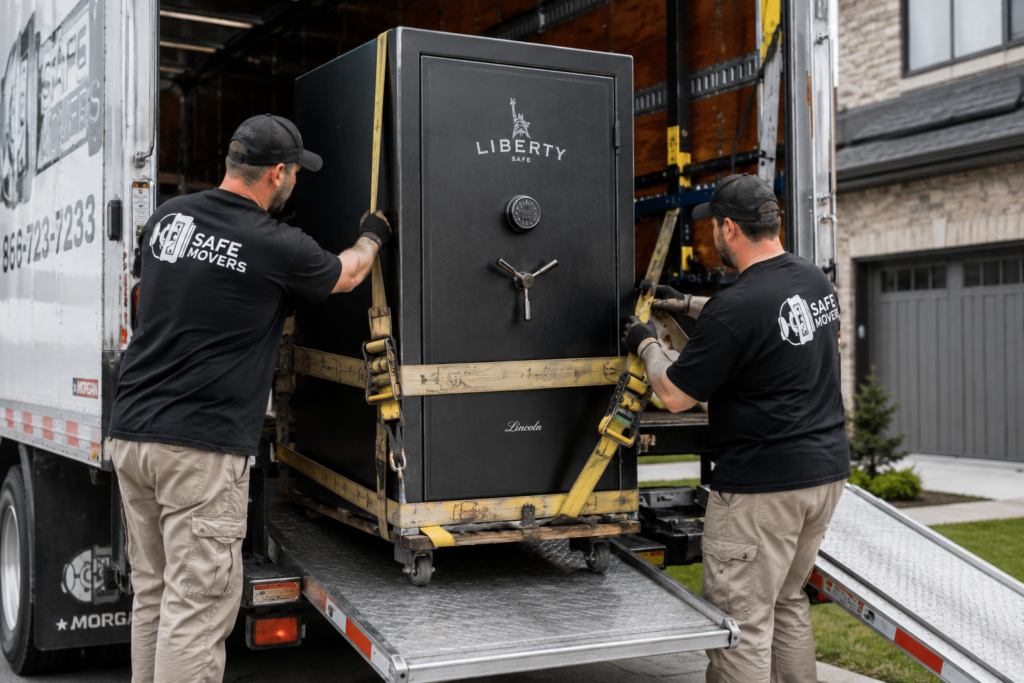
A successful move comes down to using the right tools for the job. Heavy safe transport equipment typically includes:
- Heavy-duty safe dollies rated for thousands of pounds
- Rigging straps, winches, and pulley systems for controlled lifting
- Stair-climbing hand trucks for multi-level moves
- Ramps and skid plates for loading onto trucks
- Furniture blankets and corner protection to prevent damage to floors and walls
This combination of safe moving dolly and rigging equipment allows movers to safely reposition and transport a safe without relying on brute force, which is where most accidents and injuries happen.
Gun Safe Moving: A Common Specialty
Gun safes are some of the most frequently relocated specialty items, and for good reason — they’re often extremely heavy for their size due to thick steel construction designed for fire and theft protection. A dedicated gun safe moving service understands how to navigate:
- Narrow stairwells and hallways common in residential homes
- Tight turns where standard dollies won’t fit
- The extra caution needed given the safe’s contents
If you’re searching for a gun safe moving near me, look specifically for movers who list gun safes as a specialty rather than a general “heavy item” they occasionally handle — the experience difference matters significantly when it comes to preventing damage or injury.
Stair and Tight-Space Challenges
One of the biggest hurdles in any safe relocation is navigating stair and tight-space safe moving scenarios. Basements, upper floors, and narrow doorways all require careful planning before the move even begins. Experienced movers will typically:
- Measure doorways, hallways, and stairwells in advance
- Determine whether the safe needs to be tilted, walked, or winched through tight spots
- Use specialized stair-climbing equipment designed to control descent and prevent runaway momentum
- Protect flooring, walls, and railings throughout the process
Skipping this planning step is one of the most common causes of property damage during DIY or inexperienced safe moves.
Residential vs Commercial Safe Moving
Safe relocation needs vary significantly depending on the setting.
Residential safe relocation often involves gun safes, fireproof document safes, or smaller floor safes tucked into closets or basements. These moves typically require maneuvering through household stairs and doorways.
Commercial safe relocation deals with a different scale entirely — think office vaults, retail safes, or specialized security equipment. These jobs may involve loading docks, elevators, and coordination with building management, along with additional security protocols given the sensitive nature of commercial cash and document storage.
For the largest jobs, bank vault moving services and industrial safe transport require an entirely different level of equipment, often including cranes, forklifts, or specialized rigging trucks built for multi-ton loads.
Special Considerations for Fireproof and Antique Safes
Not all safes are created equal, and certain types demand extra care.
Fireproof safe moving requires attention to the fire-resistant insulation layer inside the safe walls, which can be damaged by improper tilting or dropping — potentially compromising the very protection you’re paying for.
Antique safe moving comes with its own unique challenges. Older safes may have fragile mechanisms, original finishes, or historical value that a standard moving approach could easily damage. Movers experienced in piano and safe moving specialists work often have the deft touch needed for both, since antique safes and pianos share similar challenges: extreme weight combined with delicate exteriors.
Safe Installation and Setup After the Move
The job isn’t finished once the safe arrives at its destination. Proper safe installation and setup includes positioning the safe correctly, ensuring it’s level, and in some cases, anchoring it to the floor for added security. For gun safes especially, anchoring helps prevent tipping and adds an extra layer of theft deterrence.
Understanding Safe Moving Costs
Safe moving cost estimate figures depend on several factors:
- The safe’s weight and dimensions
- Distance between pickup and drop-off locations
- Number of stairs, tight turns, or obstacles involved
- Whether specialized equipment or additional crew members are needed
- Any required disassembly or reassembly
Insurance and Liability Protection
Given the value of both the safe and its contents, safe moving insurance and liability coverage should be a non-negotiable when choosing a mover. Ask specifically about:
- Coverage for damage to the safe itself
- Coverage for damage to your property during the move
- Whether contents are covered, or whether you should remove valuables beforehand
A trustworthy safe moving company will be transparent about their coverage and provide documentation before the job begins.
Renting Equipment vs Hiring Professionals
Some ambitious homeowners consider safe moving equipment rental to attempt a DIY move. While this can work for lighter safes with simple access, it’s worth weighing the risks: a single mistake with a several-hundred-pound safe can result in serious injury or costly property damage. For anything beyond a small, easily accessible safe, professional movers are almost always the safer and more cost-effective choice once you factor in potential damage.
Choosing the Right Safe Moving Company
When evaluating heavy safe relocation services, look for:
- Proven experience with your specific safe type and weight class
- Proper equipment for your home or building’s layout
- Clear insurance and liability coverage
- Transparent, itemized quotes based on an actual assessment
Final Thoughts
Moving a safe isn’t a job for a standard moving crew or a DIY weekend project — it requires specialized equipment, technical know-how, and careful planning to protect both the safe and everyone involved. Whether you’re relocating a home gun safe, a commercial vault, or a cherished antique, specialized safe moving professionals bring the experience needed to get it done safely and securely.
Planning a safe relocation? Reach out to a trusted local safe moving company for an assessment and a clear, upfront quote.